Gunite vs Fiberglass vs Vinyl Pools: Which Is Best in Florida?
Facebook
Twitter
LinkedIn
Choosing the right swimming pool for a Florida home involves more than picking a shape or color. Climate, soil conditions, long term durability, and maintenance all play a role in how well a pool performs over time. Homeowners usually compare three main pool types before making a decision: fiberglass pools, gunite pools, and vinyl liner pools.
Each option has its own advantages, installation process, and long-term costs. Some pools install faster, while others allow more flexibility in design and size. Understanding how these materials differ helps homeowners select a pool that fits their property, lifestyle, and long-term expectations.
In this guide, we compare fiberglass, gunite, and vinyl liner pools so Florida homeowners can better understand how each option performs in real backyard conditions.
Gunite vs Fiberglass Vs Vinyl Pools Comparison
The differences between fiberglass, gunite, and vinyl liner pools become clearer when comparing installation methods, durability, customization, and long term maintenance.
Feature
Fiberglass Pools
Gunite Pools
Vinyl Liner Pools
Installation Time
Faster installation due to prebuilt shell
Built on site, so construction takes longer
Moderate installation timeline
Customization
Limited to factory shapes
Fully customizable shapes and sizes
Some design flexibility
Durability
Strong shell but limited repair options
Very strong structure with long lifespan
Frame is durable but liner needs replacement
Interior Surface
Smooth gelcoat finish
Plaster, pebble, or aggregate finish
Vinyl liner surface
Maintenance
Lower chemical absorption
Moderate maintenance depending on finish
Liner replacement required over time
Lifespan
Around 20 to 30 years
Often 50 years or longer with maintenance
Liner replaced every 8 to 12 years
Design Features
Limited water feature options
Unlimited design possibilities
Limited features
Many homeowners researching fiberglass vs gunite vs vinyl pool options look closely at durability and design flexibility before making a final decision.
Why Many Florida Homeowners Choose Concrete Pools(Gunite)?
Gunite pools remain one of the most popular options for homeowners who want a fully customized backyard pool. Unlike fiberglass or vinyl liner pools, gunite construction allows complete freedom in design. Pool builders can adjust the size, shape, depth, and layout to match the property.
Gunite pools are often used for projects that include:
Large backyard pools
Luxury outdoor designs
Integrated spas
Custom tanning ledges
Extended steps and seating areas
Gunite pools also support complex designs such as luxury pools, infinity edge pools, and custom lap pools. These designs require flexible construction methods that fiberglass shells and vinyl liner pools often cannot support.
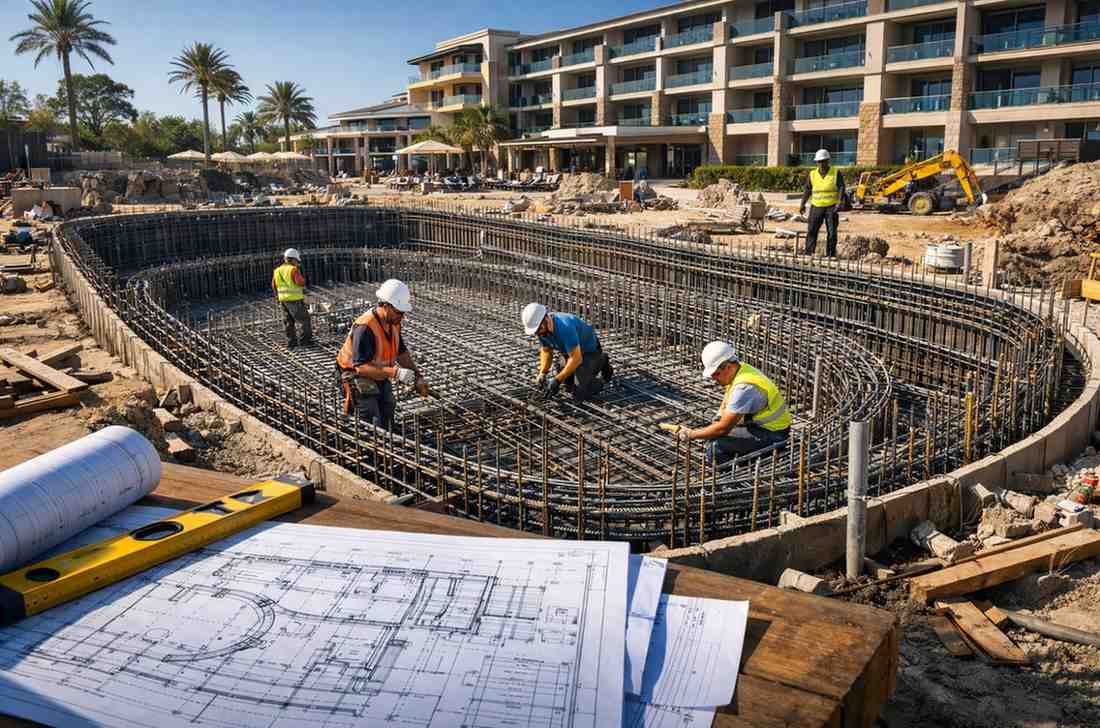
Because gunite pools are built directly on site, builders can adjust the layout to match unusual yard shapes, slopes, or existing landscaping.
Fiberglass Pools: Advantages and Limitations
Fiberglass pools are popular for homeowners who want a faster installation process. Because the pool shell is pre manufactured, the construction timeline is often shorter once the excavation is complete.
Common benefits include:
Faster installation timeline
Smooth interior surface that is comfortable for swimmers
Lower algae attachment compared with rough surfaces
Despite these advantages, fiberglass pools have some limitations.
The most common concerns include:
Limited pool shapes and sizes due to factory molds
Transport restrictions for larger shells
Less flexibility for custom design features
Homeowners researching fiberglass pool vs liner pool options sometimes prefer fiberglass for durability, though customization options remain limited.
Vinyl Liner Pools: Advantages and Limitations
Vinyl liner pools are often considered an entry level option because the initial construction cost can be lower than other pool types.
Some benefits include:
Lower upfront installation cost
Smooth interior surface
Flexible shapes compared to fiberglass shells
However, vinyl liner pools also require regular liner replacement over time.
Common limitations include:
Liners can tear or puncture
Replacement liners required every several years
Limited ability to support heavy features like waterfalls or large spas
When comparing concrete vs liner pool options, many homeowners look closely at long term maintenance costs.
Which Pool Type Performs Best in Florida Climate?
Florida weather creates unique conditions for swimming pools. High temperatures, strong sunlight, heavy rainfall, and changing soil conditions all influence how a pool performs over time.
Fiberglass pools perform well in many environments but may have size limitations for larger Florida properties.
Vinyl liner pools can work for smaller installations, though the liner may require more attention over time due to heat exposure and regular use.
Gunite pools are often chosen for Florida properties because the structure can be reinforced and adjusted to match local soil conditions. Builders can also integrate proper drainage, decking, and equipment systems during construction.
For homeowners planning long term pool ownership, structural flexibility becomes an important factor.
Cost Comparison of Fiberglass, Gunite and Vinyl Pools
Installation cost varies based on size, features, and site preparation.
Fiberglass pools often fall in the middle price range because the shell is pre-manufactured. Transportation and crane placement can add to the cost depending on access to the property.
Vinyl liner pools usually have a lower starting price. However, liner replacement costs appear later during the lifespan of the pool.
Gunite pools typically require a higher initial investment because they are built from the ground up. The benefit is long term durability and the ability to create larger and more customized pool layouts.
Over time, many homeowners find that structural longevity and design flexibility influence the overall value of the pool.
Best Pool Type for Custom Backyard Designs
Backyard design goals often influence which pool material works best.
Fiberglass pools are limited by the shapes available from the manufacturer.
Vinyl liner pools allow some shape variation but may have limitations when adding heavy design features.
Gunite pools offer the most freedom for custom backyard layouts. Builders can create curved designs, extended shallow areas, integrated spas, and detailed pool edges.
Homeowners planning a fully customized outdoor space often work with a custom swimming pool builder such as Swimming Pool Experts Inc. to design a pool that fits the property and becomes the main focal point of the backyard.
Final Thoughts on Fiberglass vs Concrete vs Vinyl Pools
Choosing between fiberglass, concrete, and vinyl liner pools depends on the goals of the homeowner. Each option offers benefits depending on budget, design preferences, and installation timeline.
Fiberglass pools work well for homeowners who prefer a faster installation and standard pool shapes.
Vinyl liner pools may appeal to homeowners looking for a lower initial installation cost.
Gunite pools continue to be a strong choice for homeowners who want full design flexibility, durable construction, and the ability to build larger or more customized backyard pools.
For Florida properties where outdoor living plays a major role, the ability to create a pool that fits the space properly often becomes one of the most important factors.
Swimming Pool Permit Process in Florida: What… Planning a inground swimming pool for your South Florida backyard is exciting, but before construction begins, homeowners must navigate one…